How Batuta AI Debugs Servers with Autonomous SSH
Explore how Batuta AI's ReAct loop autonomously debugs cloud servers via SSH. Learn through real-world examples of multi-step, self-correcting problem solving.
When we built Orquesta, we recognized a persistent pain point in server management: debugging. Traditional debugging requires a human operator to connect to a server, identify the issue, and take corrective actions. Batuta AI, one of Orquesta's key features, offers a groundbreaking approach — it autonomously connects to servers via SSH and iteratively debugs the systems.
The ReAct Loop: Thinking, Acting, Observing, Repeating
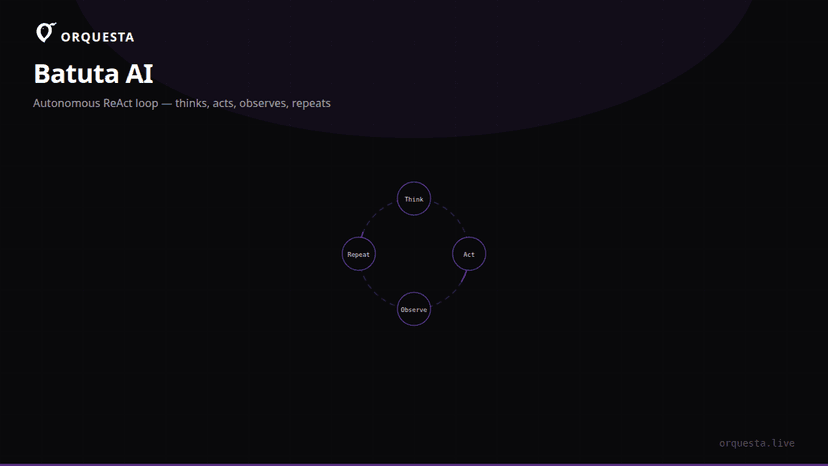
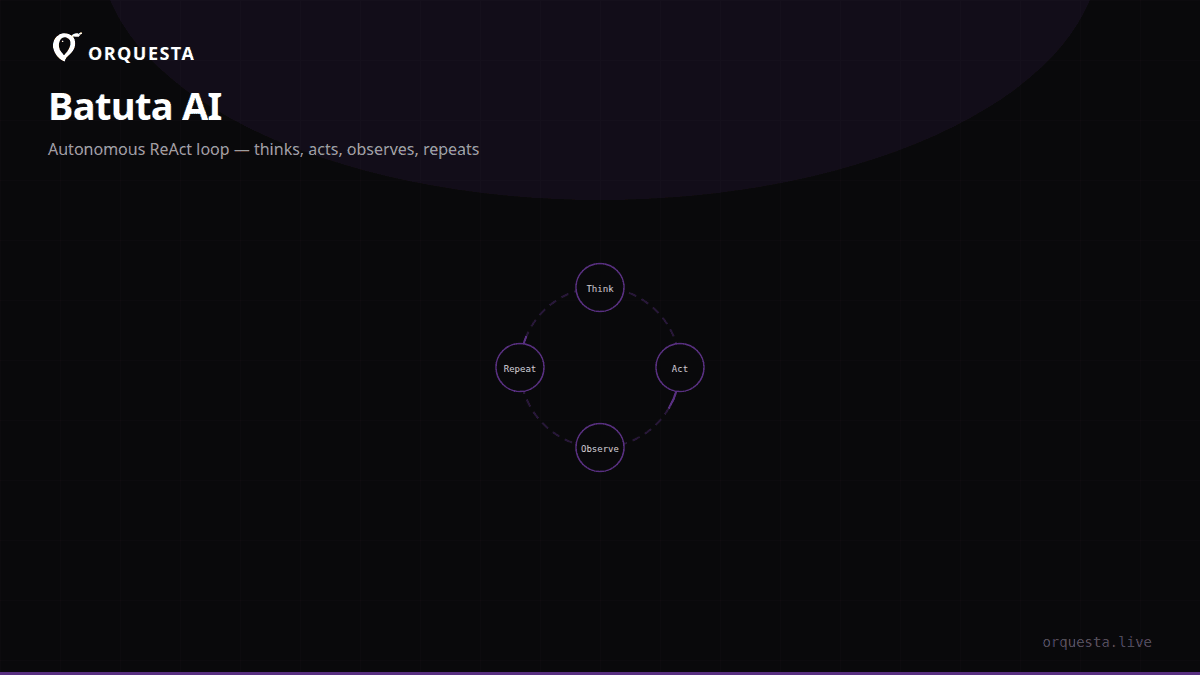
At the heart of Batuta AI is the ReAct loop, a method that mimics human problem-solving. The loop consists of four stages:
- Think: Batuta analyzes the current state of the server and generates hypotheses about the potential issues.
- Act: It executes commands to test these hypotheses or to directly address identified problems.
- Observe: Batuta evaluates the results of these commands, checking logs and system states to gather feedback.
- Repeat: Based on observations, it either concludes the task if successful or loops back to refine its approach.
These steps ensure that Batuta does not just execute predefined scripts — it dynamically adjusts its strategy as it learns more about the server's condition.
Connecting to Cloud VMs via SSH
Batuta's ability to connect to cloud VMs autonomously is fundamental to its operation. Each connection is secure, leveraging SSH to ensure that all interactions with the server are encrypted and authenticated.
Configuration and Security
- Key Management: Batuta uses SSH keys that are pre-configured during setup to authenticate its connections. These keys are stored securely and managed within Orquesta's encrypted environment.
- Network Configurations: Network configurations are handled seamlessly. Batuta can work with complex setups, including VPCs and firewalls, provided the necessary access credentials are in place.
Multi-Step Debugging in Practice
Let’s illustrate Batuta's capabilities with a real-world example: debugging a server that suddenly stopped serving web traffic.
Step 1: Identifying the Problem
Initially, Batuta's 'Think' phase involves checking the server's basic health indicators such as CPU load, memory usage, and disk space. Suppose it identifies an unusual spike in CPU usage.
Step 2: Acting on Findings
With high CPU usage as a clue, Batuta moves to the 'Act' phase by inspecting running processes. It might discover that a script is consuming excessive resources.
ps aux --sort=-%cpu | head -n 10
Step 3: Observing Outcomes
After terminating the suspect process, Batuta enters the 'Observe' phase. It monitors CPU usage again to confirm if it normalizes. If the issue persists, Batuta logs the event for additional context.
Step 4: Refining and Repeating
If CPU use stabilizes, Batuta logs the resolution and terminates the loop. If not, it refines its hypotheses, possibly examining logs for memory leaks or file descriptors, and repeats the process until the server operates normally.
Complex Debugging Scenarios
Batuta isn’t limited to simple problems. For instance, resolving network issues might involve:
- Think: Detecting packet loss or unusual latency.
- Act: Adjusting firewall rules or restarting network services.
- Observe: Testing connectivity improvements.
Such scenarios reveal Batuta's adaptability — it can escalate to more complex diagnostic steps autonomously.
Conclusion: The Future of Autonomous Server Management
Batuta AI represents a significant shift in how we approach server management, providing organizations with an intelligent, autonomous tool to maintain system health. It showcases the potential of AI-driven solutions to handle complex, multi-step debugging tasks effectively, reducing the need for human intervention and minimizing downtime.
By allowing AI to manage routine tasks, we free up developers and system administrators to focus on more strategic initiatives. Batuta's self-correcting capabilities are just the beginning, as we continue to enhance Orquesta's offering to cover even broader aspects of automation in infrastructure management.
Ready to ship faster with AI?
Start building with Orquesta — from prompt to production in minutes.
Get Started Free →